Blog

  • Tech For Real People

    Tech For Real People

    Part 1 – The Cloud

    I have a confession to make: For a long time, the Cloud was my arch-nemesis.

    I’m a person who likes tangible things. I like the weight of a physical book and the crinkle of a printed photo. When people told me my files were “in the Cloud,” I felt like I had dropped my car keys into a fog bank. If I couldn’t see the box holding my stuff, how did I know it wouldn’t just… drift away?

    If you are staring at a “Storage Full” notification with a mix of confusion and rage, this post is for you.

    The “Wallet vs. The Bank” Realization

    The breakthrough for me happened when I stopped thinking of my phone as a box and started thinking of it as a wallet.

    Imagine your Grandma is walking around with her life savings in $1 bills stuffed into her purse.

    The Pain Point: Eventually, the purse won’t zip shut. It’s heavy, it’s cluttered, and if she loses that purse, everything is gone.

    The Solution: She puts that money into a Bank.

    The Cloud: The Bank is the Cloud. It’s a big, secure building somewhere else that holds the bulk of her “stuff” so she doesn’t have to carry it.

    “But how do I see my pictures?”

    This is where the mystery usually deepens. If the pictures are at the “bank,” why can she still see them on her screen?

    I tell her: “Grandma, your phone is just your Debit Card.”

    When you use a debit card at the store, the money isn’t inside the plastic card. The card is just the “key” that reaches into the bank and pulls the money out for a second. When she scrolls through her photos, her phone is reaching into the “Digital Bank,” grabbing that memory, and showing it to her.

    The Phone: Her wallet (limited space).
    The Cloud: The vault (infinite space).
    Wi-Fi: The armored truck that moves the photos back and forth.

    Why it’s okay to not “see” it

    The reason I struggled for so long is that I didn’t trust what I couldn’t touch. But once I realized that the Cloud isn’t a “place in the sky” – it’s just a Digital Safety Deposit Box – the anxiety started to fade.

    Now, when Grandma asks, “Is it over the house?” I can smile and say, “No, it’s in the vault. And your ‘wallet’ has plenty of room for more cat pictures now.”

  • Explaining Tech to Grandma

    Explaining Tech to Grandma

    (And Why It’s Getting Harder for All of Us)

    I’m 49 years old.

    I grew up with dial-up tones, floppy disks, and the original Snake on a Nokia phone. I’m comfortable with technology. I’m not afraid of it. I know how to troubleshoot. I work in tech.

    And still, I’ll be the first to admit – it can get exhausting.

    When Tech Lost Its “Handle”

    As technology evolves, it doesn’t just get faster.

    It gets more abstract.

    We went from holding a physical CD to streaming from the cloud.

    From signing a check to verifying on the blockchain.

    From clicking “save” and hearing the disk whir, to trusting that something exists… somewhere.

    Nothing is visible anymore. Nothing is grounded. And every new update seems to come with a new vocabulary you’re expected to just know.

    The Mental Tax

    Even for those of us who grew up alongside technology, the mental overhead is real.

    Every new AI tool.

    Every security update.

    Every warning about passwords, scams, and two-factor authentication.

    It’s unpaid work.

    If keeping up feels like a workout for me – someone who lives in this space – I can only imagine how it feels for a grandparent. Or for anyone who didn’t grow up with a tablet in their hand. Or for people who are already carrying full lives and don’t have the bandwidth to constantly re-learn the rules of the world.

    Feeling overwhelmed doesn’t mean you’re bad at tech.

    It means tech stopped meeting people where they are.

    The Goal of This Series

    That’s why I’m starting this series.

    I want to explain technology the way I’d explain it to my grandma if she were still here. Or to a friend. Or to the version of myself who just wants things to work without feeling vulnerable, behind, or on edge.

    I’m going to break down the most complex, buzzy tech concepts into plain English.

    No jargon.

    No “disruptive innovation.”

    No assuming you already know the secret handshake.

    Just simple metaphors. Familiar references. Things we can actually see, touch, and understand.

    Tech Should Support Us – Not Intimidate Us

    Technology is supposed to make life easier.

    But too often, it makes people feel small. Left behind. Like they missed a meeting where the rules were explained.

    That’s not a personal failure.

    That’s a communication problem.

    At the end of the day, tech should work for us – not make us feel like we’re constantly auditioning to keep up.

    So if you’ve ever thought, “It didn’t used to be this hard,” you’re not wrong.

    And you’re exactly who this is for.

  • Best. Homework. Ever. 🎨

    Best. Homework. Ever. 🎨

    Our CEO gave us a unique assignment this week: take some paid time off and go get inspired at a museum. I traded my laptop for some legendary brushstrokes, and honestly? Every company should do this.

    I spent my “workday” wandering through the Nelson-Atkins Museum of Art, and it was exactly the mental reset I needed.

    My “Study Notes” from the Gallery:

    The Impressionist Icons: Standing next to Claude Monet’s Boulevard des Capucines and his massive Water Lilies felt like stepping into a dream. There’s something about seeing those “flickering” brushstrokes in person that a screen just can’t capture.

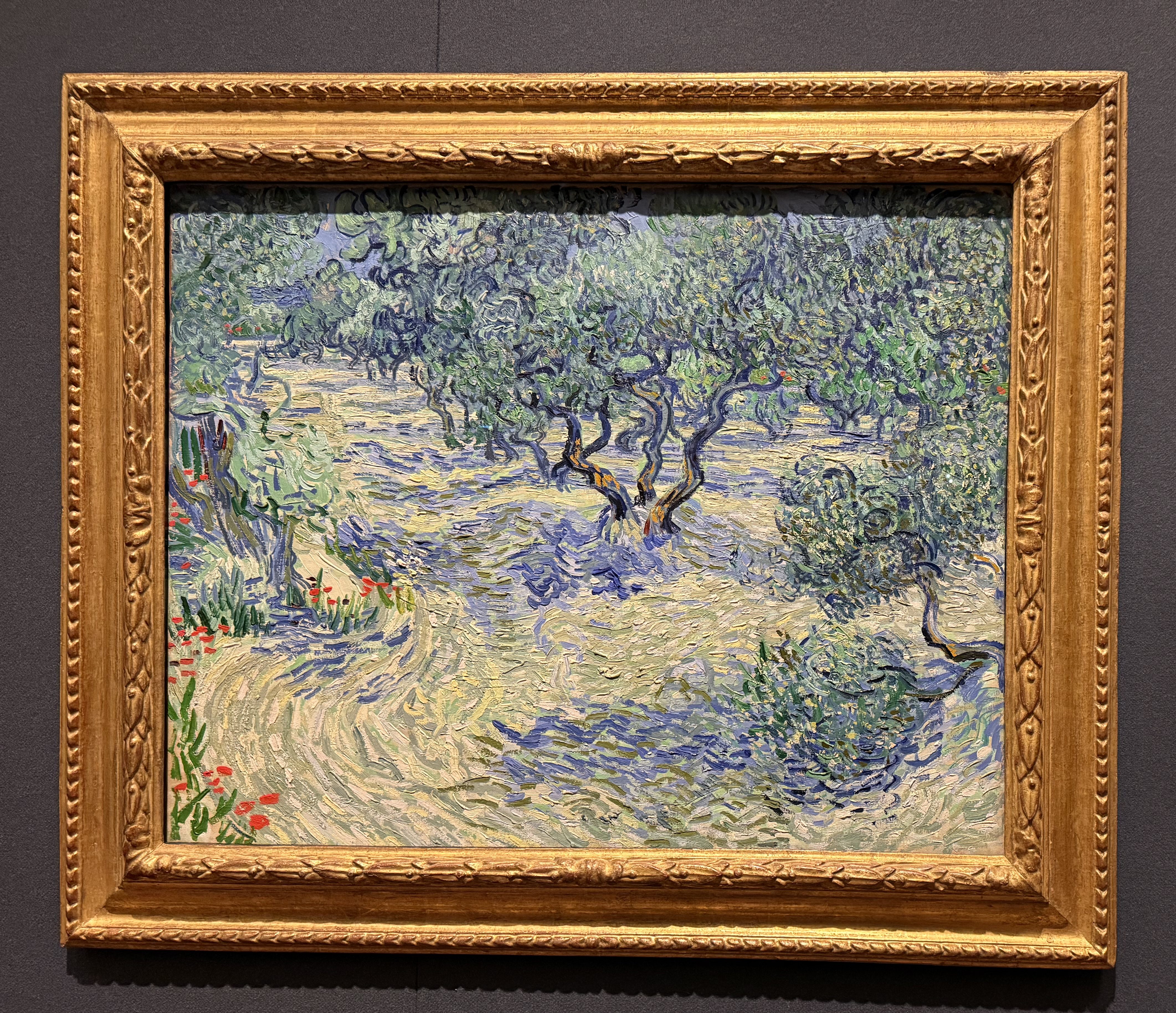
    Van Gogh’s Energy: I spent a long time at Olive Trees. Van Gogh painted this during his time in an asylum. This one really hit me. You can practically feel the movement and the “intimate, immensely old” soul of the trees that Vincent wrote about.

    Ancient & Sacred Art: From the incredibly detailed Chinese sculptures (like the Guanyin Bodhisattva) to the peaceful, quiet atmosphere of the Cloisters, it was a masterclass in history and craftsmanship.

    Huge shoutout to a leadership team that understands that rest and inspiration are part of the job. I’m heading back to my desk with a full heart and a fresh perspective.

    What’s the best “homework” a boss has ever given you? 👇

  • The Woman in the Mirror: A Journey Back to Myself

    The Woman in the Mirror: A Journey Back to Myself

    I didn’t have a breakdown when I realized it.

    There was no dramatic crying on the floor, no obvious rock-bottom moment.

    It was quieter than that.

    Our living room had a large mirror hanging on the wall – a mirror I had walked past thousands of times without really seeing. One afternoon, as I headed toward the kitchen, I caught my reflection. The house was finally still. The kids were outside playing. And for the first time in years, I truly looked.

    My eyes were tired. My hair needed tending to. I wasn’t twenty anymore. Three children had come out of my body since the last time I had genuinely checked in with the woman hosting them.

    That’s when the unsettling thought hit me:

    If someone asked me who I am right now – without using labels like mom, wife, or employee – I wouldn’t know how to answer.

    Why We Slip Away

    I hadn’t lost myself because I was weak.

    I lost myself because I was capable.

    I was reliable. I was the one who held everything together. When survival becomes the priority, your inner world goes quiet. You stop asking what you want and start asking only what is required.

    And for a long time, that works.

    But strength without self-connection is exhausting. Eventually, the roles we play – the caretaker, the problem-solver, the worker – begin to feel less like identities and more like masks we can’t take off.

    The Small Steps of Relearning

    I didn’t wake up one day with a lightning bolt of clarity.

    Rebuilding myself wasn’t about dramatic reinvention. It was about making space for someone old, and finally listening to her.

    Here’s how I started meeting myself again:

    • Tending to the Vessel
      I began taking better care of myself physically. Not as an act of “beauty,” but as an act of ownership. My body wasn’t just functional, it was mine.
    • The Power of Play
      I tried different hobbies simply to see what stuck. I gave myself permission to be bad at things. To be a beginner. To quit what didn’t bring me joy.
    • Curated Consumption
      I started reading again. I balanced serious self-help books with mildly smutty mysteries – stories I read purely because they were fun, not because they were productive.
    • Writing the Noise Out
      I began to write. Not with an agenda, but with honesty. I let the ink carry the weight of thoughts I’d been suppressing for years.

    A Roadmap for the Lost

    If you’re standing where I was – whether your kids have grown and left the nest, or you’ve been laid off from a job that once defined you – know this:

    You are not empty.

    You have simply adapted.

    To begin the journey back, try this:

    1. Follow the Curiosity
      What did you love before life got serious? Pick up one thing. Grab a paintbrush, a garden trowel, or a book – even if it’s just ten minutes.
    2. Audit Your Desires
      Ask yourself: Do I actually like this, or is it just familiar?
    3. Find Your “Smutty Mystery”
      Choose something that exists purely for your enjoyment. No lessons. No growth. Just pleasure.
    4. Give Yourself Permission
      You spent years pouring into others. It is not selfish to pour back into yourself – it’s necessary.

    Rebuilding isn’t about becoming someone new.

    It’s about realizing the woman in the mirror has been waiting for you to remember she’s there.

  • The Box is a Lie

    The Box is a Lie

    For as long as I can remember, I’ve been trying to fit. Fit the mold. Fit the expectations. Fit the way other people seemed to move through the world so effortlessly while I was over here doing high-stakes mental gymnastics just to survive a casual conversation.

    I didn’t know I was “masking” back then. I just thought I was bad at being a human.

    School was the first cage. Sit still. Pay attention. Follow the steps in order. Don’t ask “why,” just do it the way everyone else does. But my brain doesn’t move in straight lines; it moves in spirals, side doors, and sudden bursts of understanding that usually hit me three days after the lesson ended. In a classroom, that’s called a problem. In the real world, it’s called perspective.

    I spent years performing. I learned the right faces to make, the right jargon to drop, the right way to pretend I was keeping up. I worked, I “passed,” and then I stepped into the biggest, most complex box of all – motherhood.

    I became a stay-at-home mom, a role that demands a different kind of disappearing act. You spend years being the advocate, the protector, and the manager of everyone else’s world while your own edges start to blur. When I finally decided to re-enter the workforce, I didn’t just want a job. I wanted to find the person I’d been sanding down for decades.

    I started in a role where I was advocating for others – a natural fit for someone who “feels everything.” But then, something unexpected happened. That role evolved. It shifted. It became technical.

    And suddenly, I was in a room full of boxes again.

    I work in tech now. If you knew me back then, you’d be laughing. I’m not a “tech person” by any traditional definition. I don’t speak in acronyms. When someone explains a complex system to me, my brain immediately translates it into an analogy about cooking or parenting before it makes any sense.

    That is exactly why I’m good at what I do.

    I spent years advocating for my kids and for my clients, and now I’m advocating for the user. I work for a company that looked at my “too much-ness” – my empathy, my over-analyzing, my need to bridge the gap – and said, “That’s the missing piece.” They don’t need me to be a robot. They need me to be the translator. The one who can sit with a frustrated person and say, “I hear you, I get it, and let’s make this make sense.”

    I’m getting paid to think the way I used to apologize for.

    I’m not going to lie and say I’ve reached some zen state of total self-love. Unlearning decades of “you’re doing it wrong” takes time. Some days, I still catch myself trying to shrink or feeling the “imposter syndrome” that comes with being a woman in tech who didn’t take the straight-line path.

    But I know the truth now. The problem was never me. The problem was the container.

    I’m writing this for the people still trying to sand down their edges. For the moms re-entering the world wondering if their “soft skills” even matter (they do). For the ones who think they’re broken because they don’t learn in straight lines.

    I’m writing this because you need to know that the box is optional. The thing you think is your biggest flaw – that intensity, that sensitivity, that “weird” way of seeing the world – is actually your greatest strength.

    You don’t have to fit. You just have to find the people and places that have finally stopped asking you to.

    They exist. I promise. I’m living proof.

  • Why I’m Starting This Blog (And Who It’s For)

    Why I’m Starting This Blog (And Who It’s For)

    I’m not entirely sure what this will become yet, and that’s kind of the point. I’ve spent too much of my life waiting until I had it all figured out. This is me figuring it out in public.

    What I do know is who I’m talking to – the people who think differently, who’ve been told they’re too much or not enough, who are starting over for the first or fifth time and wondering if it’s too late. It’s not. And you’re not alone.

    I’ll be writing about the things that rattle around in my head – making tech make sense for people who hate jargon, what it’s actually like to rebuild your life when everything falls apart, why kindness is harder and more radical than people give it credit for, and the lessons I keep learning from pit bulls about being misjudged.
    Some of it will be useful. Some of it will just be me thinking out loud. All of it will be honest.

    If that sounds like something you want to follow along with, welcome. Let’s see where this goes.